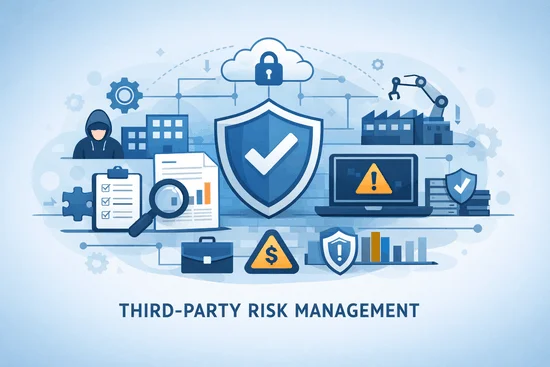

In 2026, third-party risk management (TPRM) is a critical component of cybersecurity, compliance, and business continuity. Organizations increasingly rely on vendors, suppliers, and external partners, which expands the attack surface and introduces new risks.
Third-party risk management helps organizations identify, assess, and control risks from vendors to prevent data breaches, compliance failures, and operational disruptions.
Industry reports show that over 59% of organizations have experienced a third-party data breach, and many incidents remain undetected. These breaches often cost significantly more than internal incidents, making vendor risk a top priority for organizations.
This Part II guide focuses on drivers of third-party risk management, governance structure, and risk assessment strategies.
What is third-party risk management (TPRM)?
Third-Party Risk Management (TPRM) is the process of:
- Identifying third-party vendors
- Assessing risks associated with them
- Monitoring their activities continuously
- Ensuring compliance with regulations
The goal is to reduce cybersecurity, compliance, and operational risks
Read also: How to Write Effective KRIs Part II
What are third parties in risk management?
Third parties include all external entities that interact with an organization.
Examples:
- Vendors and suppliers
- Service providers
- Consultants and agents
- Business partners and distributors
- BPOs and outsourcing firms
- Logistics and technology providers
These entities can directly or indirectly impact data security and operations
Read also: Information Security KRIs for CISO and CIO
Why intellectual property (IP) breaches can lead to bankruptcy?
Many organizations underestimate the impact of IP breaches.
Risks include:
- Loss of competitive advantage
- Exposure of sensitive business data
- Legal penalties and lawsuits
- Loss of customers and trust
IP breaches can result in financial collapse and business shutdown
Read also: IoT Device Security Risks Explained
What are the drivers of third-party risk management?
Organizations must address key challenges in managing vendor risk:
- Identifying all third-party relationships
- Understanding services provided by vendors
- Managing affiliate and subcontractor risks
- Defining critical vendors and services
- Assessing risk exposure across vendors
- Monitoring vendor performance continuously
These drivers shape the foundation of a TPRM program
Read also: How GDPR Preparation Helps with CCPA Compliance Part VI
What key questions should organizations ask?
To build an effective TPRM framework, organizations must answer:
- How do we identify all third parties?
- What services do vendors provide?
- How are subcontractors managed?
- Which vendors are critical to operations?
- How should internal audit be involved?
- Should third-party audits be performed?
These questions help define risk visibility and control
Read also: Examples of Effective KRIs Part III
Why third-party risk assessment is important?
Organizations rely heavily on third parties for mission-critical services, increasing risk exposure.
Key reasons to perform risk assessment:
- Identify cybersecurity vulnerabilities
- Prevent data breaches and fraud
- Ensure regulatory compliance
- Monitor vendor performance
- Reduce operational disruptions
Continuous assessment is essential—not a one-time activity
Read also: How GDPR Preparation Helps with CCPA Compliance Part V
What regulatory expectations require?
Regulators expect organizations to:
- Monitor third-party risks continuously
- Maintain compliance with laws and standards
- Ensure vendor accountability
Important principle:
“You can outsource the process, but not the responsibility.”
Even when using vendors, organizations remain responsible for:
- Data protection
- Compliance
- Risk management
Read also: How GDPR Preparation Helps with CCPA Compliance Part IV
What role does governance play in TPRM?
A strong governance model ensures:
- Clear roles and responsibilities
- Defined risk ownership
- Standardized vendor evaluation
- Continuous monitoring and reporting
Governance aligns risk management with business objectives
Read also: How GDPR Preparation Helps with CCPA Compliance Part III
What topics are covered in the TPRM series?
This series is designed to help organizations build a complete vendor risk program:
- Drivers of Risk Management (this blog)
- Alignment and Governance
- Vendor Categorization
- Risk Analysis
- Monitoring Vendor Risks
- Risk Communication
- Optimization and Standards
Each part builds toward a complete TPRM framework
Read also: Breach Management Guide Part II
What happens if third-party risk is not managed?
Failure to manage vendor risk can lead to:
- Data breaches
- Financial loss
- Regulatory penalties
- Operational failures
- Reputation damage
Third-party risk is one of the top causes of modern cyber incidents
Read also: Key Risk Indicator and KPI in Cybersecurity Part I
Conclusion
In 2026, third-party risk management is essential for protecting organizations from cybersecurity threats, compliance failures, and operational disruptions. Vendors play a critical role in business operations, but they also introduce significant risks. Organizations must build structured TPRM programs that include risk assessment, governance, and continuous monitoring. Understanding the drivers of third-party risk and implementing strong governance ensures resilience, compliance, and long-term business success.
If you would like guidance on strengthening your DPDP compliance framework or understanding how governance, risk, and compliance tools can support your organization, feel free to contact us for assistance.
You can also visit our website to explore how modern GRC platforms help organizations manage data protection, risk management, and regulatory compliance in a more structured and scalable way.
FAQ
TPRM is the process of identifying and managing risks from vendors and external partners.
Related Posts