
Introduction
GDPR preparation helps businesses achieve CCPA compliance by aligning data protection practices, enabling efficient consumer rights management, and streamlining workflows for data handling and reporting. By utilizing GDPR processes like consent management and data mapping, organizations can reduce the complexity of CCPA compliance, saving time and resources.
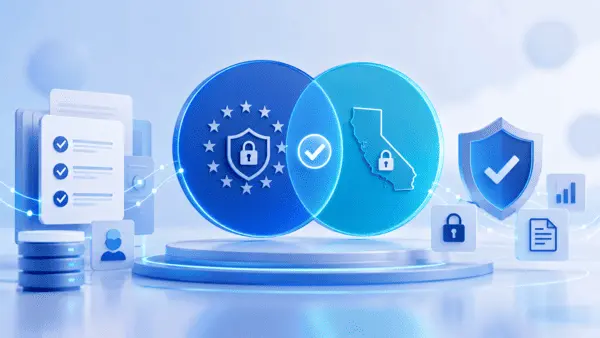
The General Data Protection Regulation (GDPR) and the California Consumer Privacy Act (CCPA) are two of the most impactful data privacy laws in the world today. While they share similar goals - protecting consumer data and ensuring privacy - compliance with each law requires distinct efforts.
However, GDPR preparation can significantly streamline your path to CCPA compliance. If your organization has already implemented GDPR measures, you're well-positioned to meet CCPA requirements, thanks to overlapping data practices and principles.
Key Differences Between GDPR and CCPA
| Aspect | GDPR | CCPA |
|---|---|---|
| Geographic Scope | Applies to businesses processing EU data | Applies to businesses handling California data |
| Consumer Rights | Extensive rights (access, erasure, portability) | Access, deletion, opt-out of data sale |
| Data Processing | Requires explicit consent for processing | Allows opt-out for data sales |
| Penalties | Up to €20 million or 4% of revenue | Up to $7,500 per violation |
Read also: How to Start DPDP Compliance in India
How GDPR Preparation Helps with CCPA Compliance?
1. Data Inventory and Mapping
GDPR mandates that businesses conduct data mapping to understand what personal data is collected, where it's stored, and how it flows within and outside the organization. This data inventory process directly helps with CCPA, which also requires transparency in data collection and sharing.
Key Action Steps:
- Review GDPR data mapping records: Ensure all personal data, including California residents' data, is accurately mapped.
- Expand mapping for CCPA: Highlight data sold, shared, or used for targeted advertising, as CCPA has stricter requirements in this area.
- Example: In your GDPR compliance checklist, you may already have mapped out user data. Now, map the same data with a focus on how it's shared or sold to comply with CCPA's opt-out requirements.
Read also: DPDP Data Inventory & ROPA
2. Consent Management Systems
GDPR requires that you obtain clear, explicit consent from users before collecting and processing their personal data. Similarly, CCPA mandates that users should be able to opt-out of the sale of their data. By utilizing the GDPR consent mechanisms, you can simplify CCPA's opt-out requirements, ensuring both transparency and a seamless user experience.
Key Action Steps:
- Enhance consent banners: Extend your GDPR cookie banner to explicitly include CCPA's opt-out of data sale functionality.
- Monitor consent logs: Use your existing GDPR consent log system to track users who opt-out of CCPA-related data sales.
Read also: DPDP Privacy Risk Framework
3. Data Subject Access Requests (DSARs)
Both GDPR and CCPA provide consumers with rights to access, delete, and correct their personal data. GDPR has established workflows for Data Subject Access Requests (DSARs) that can be leveraged for CCPA compliance. Instead of building separate systems for GDPR and CCPA, integrating workflows for handling DSARs across both regulations can save time and reduce errors.
Key Action Steps:
- Unify request management: Implement a single system to handle both GDPR and CCPA requests, as data access and deletion are required by both laws.
- Update response timelines: While GDPR mandates 30-day responses, CCPA provides 45 days, so ensure the system can accommodate both.
Read also: DPDP Data Security Controls
4. Privacy Policy Updates
Under both GDPR and CCPA, businesses are required to update their privacy policies to reflect data practices. GDPR's transparent consent requirements can help streamline the CCPA policy update process. By integrating the transparency provided in GDPR privacy policies, businesses can easily create clear CCPA disclosures outlining how personal data is collected, used, and shared.
Key Action Steps:
- Combine GDPR + CCPA privacy policy: Use your GDPR policy as the foundation and add CCPA-specific sections regarding data selling and consumer rights.
- Incorporate opt-out clauses: Ensure the policy clearly explains how users can opt-out of the sale of their data.
Read also: DPDP Data Protection & Security
5. Vendor Management and Third-Party Contracts
GDPR requires businesses to ensure that their third-party vendors comply with its data protection rules. Similarly, CCPA demands that businesses disclose the third-party sharing of data and allow users to opt out of data sales by third parties. By extending your GDPR third-party contract reviews, businesses can prepare for CCPA by ensuring third-party vendors comply with both regulations.
Key Action Steps:
- Update vendor contracts: Ensure all third-party vendors handling personal data are informed of their responsibilities under both GDPR and CCPA.
- Review data sharing: Maintain a clear record of what data is shared with third parties and allow users to easily opt out.
Read also: DPDP Data Governance & MDM
How to Leverage GDPR for a Seamless CCPA Transition
Now that you know how GDPR helps with CCPA compliance, here's how you can implement a unified approach:
- Align Data Handling Procedures: Use GDPR's rigorous data handling processes as the baseline for your CCPA compliance efforts.
- Implement Cross-Functional Teams: Combine your GDPR and CCPA teams to ensure a streamlined approach to compliance, minimizing redundancy.
- Centralize Compliance Tools: Use the same software tools for managing consent, DSARs, and data mapping for both GDPR and CCPA compliance.
By aligning these two regulations, businesses can save time, reduce costs, and ensure stronger compliance across both laws.
Read also: CVE & DPDP Compliance: Vulnerabilities Guide
Practical CCPA Checklist Using GDPR Best Practices
- Data Mapping: Expand your existing GDPR data maps to include California residents' data.
- Consent Management: Use your GDPR consent mechanisms to include opt-out options for CCPA.
- DSAR System: Integrate GDPR DSAR workflows to handle both GDPR and CCPA requests.
- Privacy Policy: Update privacy policies to include both GDPR and CCPA disclosures.
- Vendor Compliance: Ensure third-party vendors are compliant with both GDPR and CCPA.
Read also: DPDP Compliance for Startups
Conclusion
GDPR preparation plays a crucial role in streamlining CCPA compliance, helping businesses save time, reduce complexity, and avoid the pitfalls of managing multiple privacy regulations separately. By aligning your data handling practices and ensuring robust consent management, transparency, and data subject rights procedures, you can seamlessly transition to CCPA compliance.
With many shared principles between the two regulations, businesses that have already implemented GDPR measures are in a great position to ensure CCPA compliance - creating a unified and efficient compliance strategy.
Explore how GRC³'s Risk Management Software helps organizations identify, assess, monitor, and reduce risks with a structured, compliance-ready approach.
If you would like guidance on strengthening your DPDP compliance framework or understanding how governance, risk, and compliance tools can support your organization, feel free to contact us for assistance.
You can also visit our website to explore how modern GRC platforms help organizations manage data protection, risk management, and regulatory compliance in a more structured and scalable way.
FAQs
GDPR applies to EU residents and requires explicit consent for data processing, whereas CCPA is focused on California residents, allowing users to opt-out of the sale of their personal data.
Related Posts